Those Old Film Reels in the Closet Might Be Worth More Than You Think
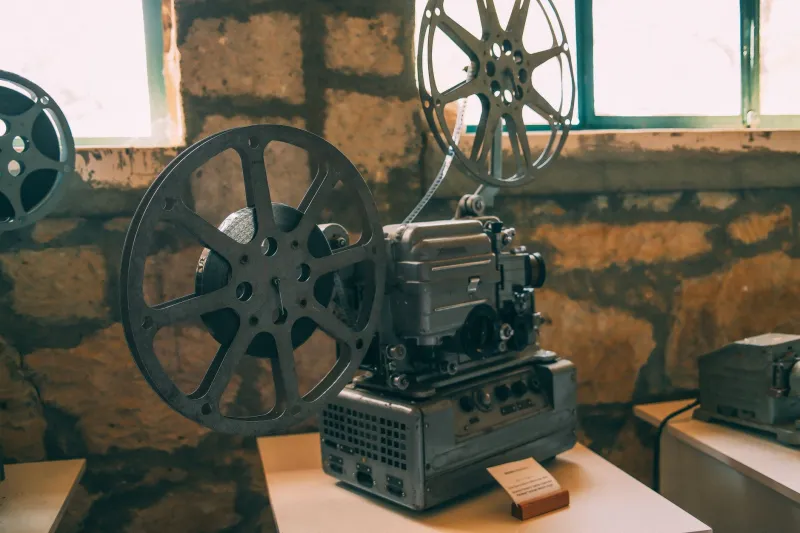
Somewhere in your parents' house — maybe the hall closet, maybe a cardboard box shoved under the basement stairs — there's probably a stack of old film canisters or a shoebox stuffed with VHS cassettes. They've been sitting there for thirty, maybe forty years. Nobody really talks about them. Nobody's watched them in ages. And yet, according to archivists, historians, and a growing community of collectors, those forgotten reels might be among the most irreplaceable things your family owns.
We're living through what preservationists call a quiet emergency. Millions of hours of American home movie footage — birthday parties, road trips, backyard barbecues, first steps, last days with people we've lost — are slowly disintegrating in storage spaces across the country. And most families have no idea it's happening.
The Science of Decay (It's Not Pretty)
Here's the uncomfortable truth about film and magnetic tape: they were never built to last forever. Standard 8mm and Super 8 film, the formats that dominated home movie-making from the 1950s through the late 1970s, are made with a cellulose acetate base that undergoes a process called "vinegar syndrome" as it ages. The film literally starts to smell like vinegar as it breaks down, becoming brittle, warped, and eventually unplayable.
Magnetic formats like VHS, Betamax, and even early camcorder tapes face their own version of doom. The magnetic particles that hold the image information gradually shed from the tape's surface — a process called "binder hydrolysis" — meaning every year you wait, more of that footage is simply gone.
The National Film Preservation Foundation estimates that a significant portion of pre-1950 American films have already been lost permanently. For home movies, which were never catalogued or stored with the same care as commercial releases, the situation is arguably worse. "We're racing against chemistry," one archivist at a regional historical society put it bluntly. "And chemistry doesn't wait."
Why Your Family Footage Matters Beyond the Family
It's easy to assume that home movies are purely personal — sentimental, sure, but not exactly historically significant. That assumption turns out to be pretty wrong.
Historians and documentary filmmakers have increasingly turned to amateur footage to fill gaps in the official record. Commercial newsreels and studio productions tended to focus on major events and public figures. Home movies captured everything else: the way a particular neighborhood looked in 1962, how people actually dressed and moved and interacted in everyday settings, the storefronts and streetscapes that no professional camera ever bothered to document.
The Prelinger Archives, a massive collection of ephemeral and amateur films now housed at the Library of Congress, has demonstrated just how rich this material can be. Footage from ordinary American families has turned up in major documentaries, museum exhibitions, and academic research projects. Some reels have provided the only surviving visual record of specific communities, cultural traditions, or historical moments.
That's part of why institutions like the Library of Congress, the Smithsonian, and dozens of regional archives have launched outreach programs specifically aimed at everyday families. They want to know what's sitting in your closet.
The Collector Market: When Personal History Gets a Price Tag
Beyond the cultural and historical value, there's an actual market emerging for certain categories of vintage home footage. Collectors and media licensing companies actively seek out films that capture specific eras, locations, or events — and they're willing to pay for the right material.
Footage shot in major American cities during the mid-twentieth century is particularly sought after. Films from the 1950s and 1960s showing urban street life, vintage cars, period-accurate storefronts, or now-demolished landmarks can command real money from licensing agencies that supply content to film and television productions. A few minutes of clear, well-preserved Super 8 footage of, say, downtown Chicago or a Southern California beach town from 1965 could be worth hundreds of dollars to the right buyer.
Films documenting specific cultural events — civil rights marches, early rock and roll concerts, world's fairs, or regional festivals — are even more valuable. In rare cases, amateur footage has turned out to be the only surviving visual record of a historically significant moment, making it genuinely priceless from a research standpoint.
That said, most home movies won't make you rich. The real value for most families is personal and emotional — the chance to see relatives who have passed, to watch yourself as a child, to recover memories that would otherwise be completely lost.
So What Should You Actually Do?
If you want to track down and preserve your family's film collection, here's a practical roadmap to get started.
Start with a search. Check the obvious spots first — closets, attics, basements, garages. Film canisters are usually metal or plastic, ranging from small (for single reels) to larger flat cases. VHS and Betamax tapes are harder to miss. Don't forget to ask older relatives; sometimes these materials get passed around without anyone keeping track.
Identify what you have. Once you've found something, figure out the format before you try to play it. Super 8 and standard 8mm film look similar but require different projectors. VHS, Betamax, and early camcorder formats (Hi8, Video8, MiniDV) all need specific equipment. Playing a deteriorating tape or reel on the wrong device can cause irreversible damage.
Smell test for film. Seriously — if your old film canisters smell strongly of vinegar, that's a sign of active deterioration. Don't panic, but do prioritize getting those reels digitized as soon as possible. A mild smell means you still have time; a strong smell means act now.
Find a reputable digitization service. There are national services like Legacybox and ScanMyPhotos, as well as local shops and regional archives that offer digitization. Prices vary widely, so shop around. For valuable or deteriorating materials, consider a professional archival service rather than a consumer-grade option. Some local libraries and historical societies offer free or subsidized digitization programs — worth checking before you pay out of pocket.
Back up everything. Once digitized, don't just rely on a single hard drive. Use the 3-2-1 rule: three copies, on two different types of media, with one stored offsite (or in cloud storage). Digital files can be lost just as easily as physical ones if you're not careful.
Consider donating or sharing. If your footage captures significant community or historical content, reach out to your local historical society or public library. Many institutions actively want this material and can help with preservation in exchange for access to the collection.
The Window Is Closing
Preservationists are pretty consistent on one point: the families who wait another decade to deal with this stuff are often going to find that it's too late. The chemistry doesn't pause while you get around to it.
But there's also a genuinely exciting flip side to all of this. Families who do go digging through those old closets frequently discover something unexpected — a version of their own history they'd forgotten existed, faces they haven't seen in years, moments that nobody thought to write down but somebody thought to film. That's not nothing. In fact, for a lot of people, it turns out to be everything.
The canisters are waiting. The clock is ticking. And what's inside might surprise you.