What Grandma's Chicken Soup Recipe Is Actually Telling You About Your Family Tree
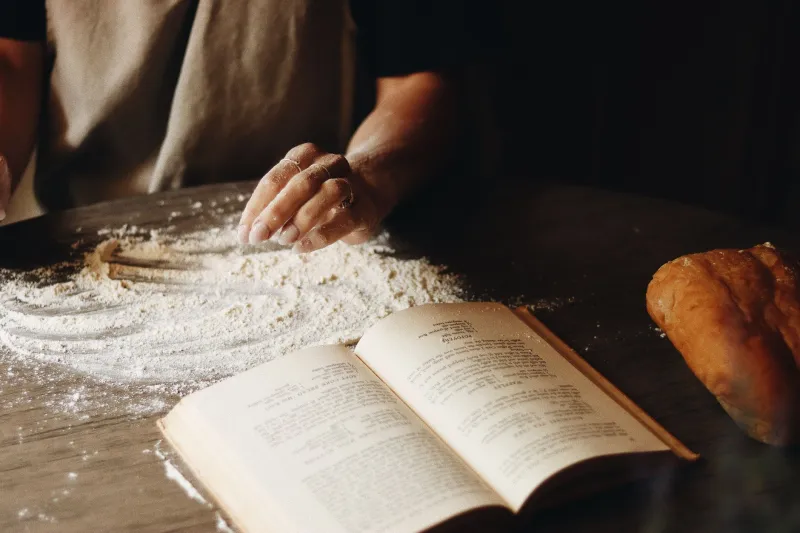
For most people, a handwritten recipe card is just a recipe card. Maybe it smells faintly of vanilla. Maybe the ink has bled a little from a long-ago kitchen spill. But for a growing community of amateur historians and genealogy buffs, those dog-eared cards tucked into the backs of old cookbooks are something else entirely — they're primary source documents, rich with clues about who your ancestors really were, where they came from, and what they were trying to hold onto.
Call it culinary genealogy. It's not an official academic field (yet), but it's quietly picking up steam in living rooms, community libraries, and online forums across the country.
The Clues Hidden in Plain Sight
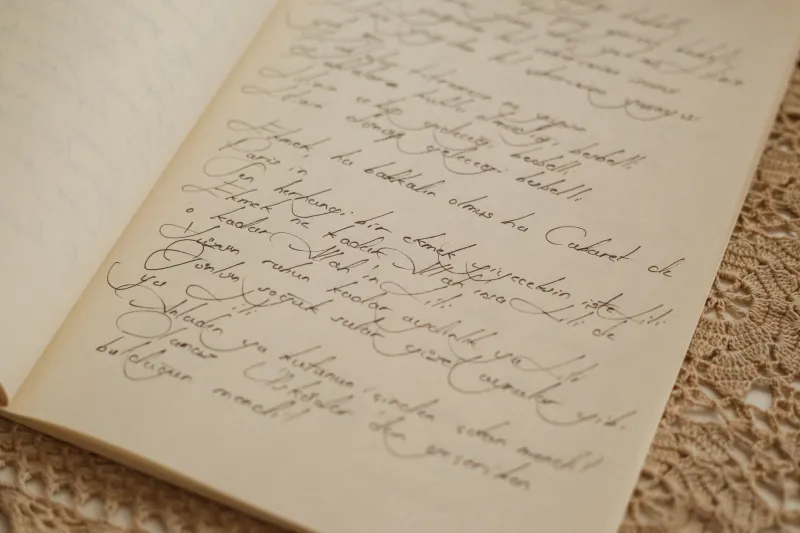
Here's the thing about old recipes: they're almost never just about food. When your great-grandmother wrote down her pierogi dough recipe in the 1940s, she wasn't just preserving a dinner option. She was documenting a piece of cultural identity that she carried across an ocean, adapted to American pantry staples, and passed down as a kind of edible memory.
Food historians have known this for decades. But what's new is the sheer number of everyday Americans who are now applying that lens to their own family collections — and coming up with genuinely surprising results.
Take ingredient substitutions, for example. When researchers and hobbyists look closely at recipe annotations, they often find evidence of economic hardship or wartime rationing. A note that reads "use lard if no butter" or "half the sugar — it'll still be fine" isn't just practical advice. It's a timestamp. It tells you something about when a recipe was written, what resources were available, and what pressures the family was navigating at the time.
Other clues are even more personal. Recipes written in two languages — English layered over Polish, or Spanish tucked alongside English phonetic spellings — reveal moments of cultural transition. A dish that blends Southern cooking techniques with West African spice profiles might point to migration routes that official records never captured. And sometimes, the absence of certain ingredients tells a story of its own: a family that suddenly stopped using pork, for instance, might have converted religions or moved to a new community with different food norms.
Amateur Historians Are Doing Real Work
Amanda Kowalski, a librarian from outside Chicago, started photographing her family's recipe collection about three years ago as a pandemic project. What began as a casual hobby turned into something she describes as "basically a part-time obsession."
"I found a recipe in my grandmother's handwriting that had a completely different last name written at the top," she says. "It turned out to be from a woman in her village in Poland who didn't survive the war. My grandmother had brought the recipe with her when she emigrated, almost like she was carrying that woman's memory with her."
Kowalski eventually connected with a digital preservation project affiliated with a Midwestern university, where archivists are now working to catalog recipes like hers as part of a broader effort to document immigrant foodways in the Great Lakes region.
Her story isn't unusual. Across the country, people are bringing similar discoveries to historical societies, genealogy groups, and university food studies programs. Some are contributing scanned images to platforms like Ancestry or dedicated culinary heritage projects. Others are building their own online archives and connecting with distant relatives through shared recipe discoveries.
Why Cookbooks Are Actually Better Than Census Records (Sometimes)
Official documents have obvious limitations. Census records can be incomplete, names get misspelled, and entire communities were systematically undercounted for generations. But a handwritten cookbook? That's a document someone chose to create and preserve. It reflects real daily life in a way that a government form simply can't.
"Recipes capture the texture of lived experience," says one food studies researcher who has collaborated with several community archiving projects. "They tell us what people ate when they were celebrating, when they were grieving, when they were trying to fit in, and when they were quietly refusing to."
That last part — the quiet refusal — turns out to be one of the most fascinating threads in culinary genealogy. Many families who immigrated to the US in the early twentieth century felt enormous pressure to assimilate. They anglicized their names, changed their clothing, learned English as fast as possible. But in the kitchen, they often held on. Recipes became one of the last places where cultural identity survived intact, sometimes hidden in plain sight inside a Betty Crocker binder.
The Digital Preservation Push
One of the biggest challenges facing this movement is the fragility of the materials themselves. Old index cards yellow and crumble. Ink fades. Cookbooks get thrown out during estate sales without anyone realizing what's inside them. That's why several organizations are now actively encouraging families to digitize their culinary archives before it's too late.
The Smithsonian's various food-related initiatives have touched on this, and smaller regional projects — including efforts at community colleges and public libraries — are popping up in cities from New Orleans to Seattle. Some genealogy platforms have started adding food heritage as a category for user-contributed content, recognizing that recipes represent a distinct and underutilized type of historical record.
For those who want to contribute, the process is usually as simple as scanning cards and uploading them with basic metadata: approximate date, family origin, any known context. Researchers can do a lot with even minimal information.
How to Start Your Own Culinary Dig
If you've got a box of old recipe cards sitting in a closet somewhere, here's a low-pressure way to start exploring what's in them:
- Look for annotations. Notes in the margins, crossed-out ingredients, and added comments often reveal when and how a recipe evolved.
- Notice the language. If a recipe switches languages mid-sentence, that's worth investigating.
- Research the ingredients. Some items were regionally specific or only available during certain time periods, which can help you date a recipe.
- Check the handwriting. Multiple handwriting styles in one cookbook might mean the recipes were passed down through several generations.
- Cross-reference with family history. Does the dish connect to a region your family came from? Does it align with any major life events you know about?
You don't need a history degree to do any of this. You just need curiosity — and maybe a willingness to spend an afternoon with something that smells like your grandmother's kitchen.
More Than Just Nostalgia
It would be easy to dismiss culinary genealogy as a sentimental hobby, a way for people to feel connected to the past without doing anything particularly rigorous. But the researchers and archivists engaging with this material take it seriously — and for good reason.
The stories embedded in family recipes are often stories that were never written down anywhere else. They belong to communities that were overlooked by mainstream historical narratives, to individuals whose lives didn't make it into any official record. Recovering those stories, even partially, matters.
And honestly? It's also just a genuinely compelling way to spend your time. There's something quietly thrilling about holding a piece of paper that someone touched a hundred years ago, trying to decode what it meant to them and what it might mean to you. That's history — not the textbook kind, but the real, lived, slightly grease-stained kind.
Your family's recipe box might be the most interesting archive you've never thought to open.