Grandma's Shoebox Is a Gold Mine: Why Historians Are Begging Families to Share Old Letters and Diaries
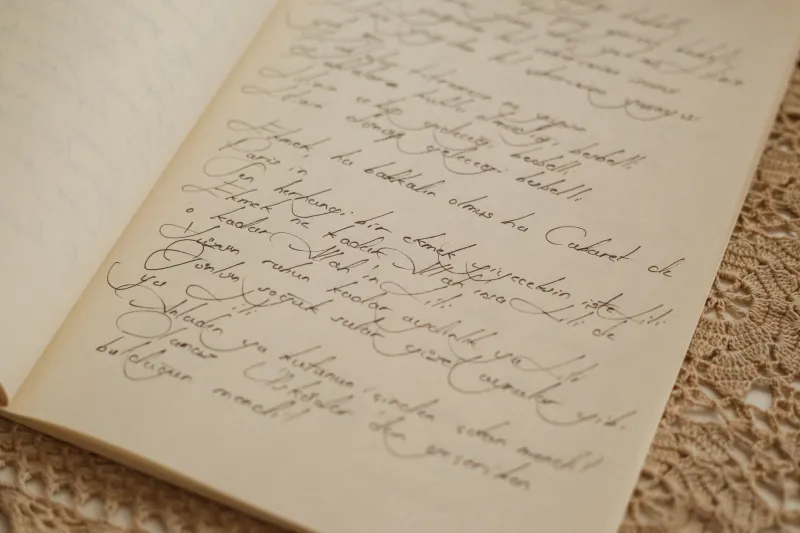
Somewhere in your parents' house — maybe in a closet, maybe in a cardboard box that's survived three moves — there's probably a stack of old letters. A diary with a broken clasp. A bundle of postcards tied with a rubber band that's been there so long it's fused to the paper. You've probably glanced at them once or twice, felt a little sentimental, and then moved on.
Historians want you to stop doing that.
Across the country, a quiet but genuinely exciting shift is happening in how we understand American social history. And the engine driving it isn't some newly unearthed government record or a digitized newspaper archive. It's the personal correspondence and private journals of completely ordinary people — farmers, factory workers, housewives, immigrants, teenagers — whose everyday words are turning out to be some of the most revealing historical documents researchers have ever encountered.
Why Official Archives Miss the Point
For a long time, history was mostly written from the top down. Presidential papers, congressional records, corporate ledgers — the documents that survived were almost always the ones generated by institutions with the resources to preserve them. If you wanted to know what life looked like in rural Ohio in 1902, you'd be piecing together census data and maybe a local newspaper, neither of which tells you what people actually felt, or feared, or laughed about.
Personal letters and diaries fill that gap in a way nothing else really can.
"What strikes me every single time is the texture," says one historian who has spent the better part of two decades building a research practice around crowdsourced personal documents. "You can read a hundred official reports about the 1918 flu pandemic and come away with statistics. Then you read a letter from a woman in Indiana writing to her sister about watching her neighbors die, and suddenly it's real in a way data just isn't."
That intimacy is the whole point. Personal correspondence wasn't written for posterity. It was written for one specific person, which means the writer had no reason to perform or sanitize. What you get is candid — sometimes shockingly so. Opinions about politics, complaints about husbands, fears about money, joy over small things. The full, messy, human record.
The Crowdsourcing Revolution in Historical Research
What's changed recently isn't just that historians value these documents — they always have. What's changed is the infrastructure for finding and sharing them.
Several universities have launched formal programs inviting families to submit digitized versions of personal collections. The response has been, by most accounts, overwhelming. One Midwestern university's digital archive program received more than 4,000 individual document submissions in its first two years alone, from families spanning 43 states.
Amateur genealogists have become unlikely but crucial partners in this effort. The explosion of platforms like Ancestry and 23andMe sent millions of Americans digging through family history, and a lot of them discovered physical documents along the way. Some of those hobbyists have become sophisticated archivists in their own right, scanning materials, adding metadata, and connecting with academic institutions who can put the documents to scholarly use.
"The genealogy community has done something incredible," notes a digital archivist who works with a historical society in New England. "They're motivated, they're detail-oriented, and they genuinely care about preservation. We've gotten collections from them that we never would have found on our own."
What These Documents Are Actually Revealing
The findings coming out of personal document research are reshaping entire fields of study. Historians examining letters between working-class women in the early twentieth century have uncovered sophisticated political networks that never made it into official labor movement histories. Diaries from Black Americans during the Great Migration have provided first-person accounts of the journey north that challenge long-held assumptions about motivations and experiences.
Even documents that seem mundane on the surface can carry enormous weight in context. A grocery list from 1943 becomes a window into wartime rationing. A teenager's diary from the 1950s captures the social pressures of postwar suburban life with a precision no sociologist could manufacture. A bundle of letters between immigrant siblings in the 1910s maps the emotional geography of assimilation in ways that policy documents simply don't.
"We keep discovering that ordinary people were paying attention to everything," one researcher explains. "They had opinions about the news, about their government, about race and gender and class — and they were writing those opinions down in private, which means we're getting something close to what they actually believed."
How to Get Involved (And Why You Should)
If you've got family documents sitting around, the good news is that getting them into the right hands has never been easier. Most state historical societies have digitization programs and will walk you through the process. Many universities with strong history departments actively solicit personal collections and can provide guidance on what's most useful.
You don't have to give anything up permanently. Most institutions are happy to work with digital copies, meaning your family keeps the originals and researchers get access to the content. Some families have even had their documents professionally scanned for free through university partnerships in exchange for allowing academic use.
If you're not sure where to start, the Library of Congress has resources on its website specifically designed for families navigating this process. Local genealogical societies are another excellent entry point — they often have direct relationships with regional archives and can connect you with the right people.
The one thing historians universally caution against: waiting. Paper degrades. Ink fades. The generation that could explain what's in those boxes is getting older. Every year, irreplaceable material is lost simply because no one got around to dealing with it.
The Bigger Picture
There's something genuinely moving about what this movement represents. For most of human history, the only people whose inner lives got recorded were the wealthy and the powerful. Everyone else lived and died and left almost no trace of what they actually thought or felt.
Personal letters and diaries are the exception to that rule. They're the places where ordinary people left themselves behind — their humor, their heartbreak, their small daily observations about a world that no longer exists. And it turns out historians can do extraordinary things with them.
So the next time you're tempted to toss that shoebox, maybe take a minute to flip through it first. You might be holding a piece of history that nobody else has. And somewhere out there, a researcher is hoping you'll share it.