Spinning Back: How Gen Z Fell Hard for a Format Their Parents Tossed in the Trash
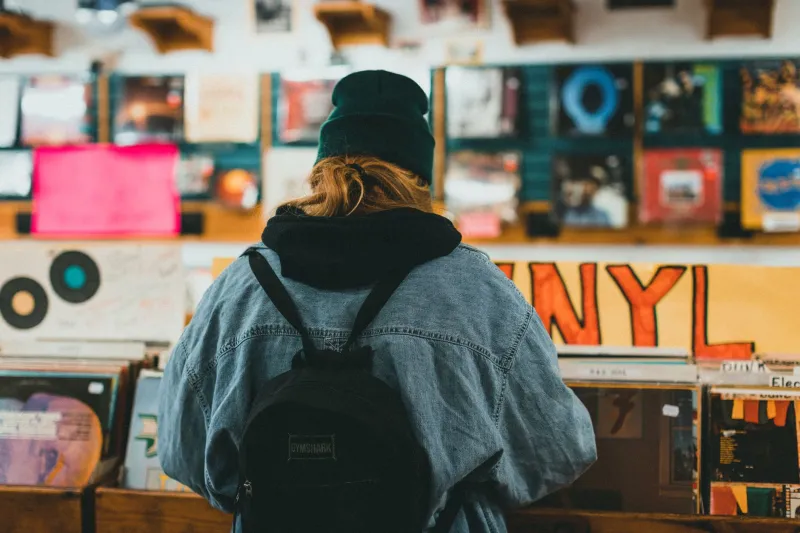
Somewhere in America right now, a 21-year-old is spending $45 on a copy of Fleetwood Mac's Rumours — a record their mom probably donated to Goodwill in 1994. They'll carry it home carefully, lower a needle onto it with genuine reverence, and post the whole ritual to TikTok. And honestly? The video will get thousands of likes.
Vinyl's resurrection is one of the stranger cultural stories of the last decade. The format peaked in the late 1970s, got muscled out by CDs, and then nearly vanished entirely during the MP3 era. By the mid-2000s, record pressing plants were shutting down, and the format felt about as relevant as the eight-track. But something shifted. Sales started climbing again around 2008, and they haven't stopped. In 2023, vinyl outsold CDs in the US for the second consecutive year — a milestone nobody saw coming. The Recording Industry Association of America reported over $1.4 billion in vinyl revenue last year alone.
So what happened? And why are so many of the people driving this trend young enough to have grown up entirely on streaming?
The Sound Argument (And Why It's More Complicated Than You Think)
Ask a devoted vinyl collector why they prefer records, and you'll almost always hear some version of the same answer: it just sounds warmer. That word — warm — comes up constantly in collector circles, and it points to a real technical distinction between analog and digital audio.
Digital music works by sampling sound thousands of times per second and converting those samples into data. It's incredibly precise. Vinyl, on the other hand, captures sound as a continuous physical groove — a literal wave pressed into plastic. Audiophiles argue that this analog reproduction preserves subtle sonic textures that digital formats clip or compress away.
Audio engineers, though, will tell you it's not that simple. "A well-mastered digital file on a good speaker system will objectively outperform most consumer-grade turntable setups," says one recording engineer who's worked with major Nashville labels for over two decades. "But 'better' isn't always the point. People aren't just buying a delivery mechanism for audio data. They're buying an experience."
And that experience — the ritual of it, the physicality — turns out to matter enormously to a generation raised entirely on frictionless streaming.
When Convenience Gets Old
There's a real irony at the center of vinyl's comeback. Spotify and Apple Music have made music more accessible than at any point in human history. You can listen to virtually any song ever recorded within seconds, on a device that fits in your pocket. It is, by every rational metric, a miracle.
And yet.
"I think that's actually part of why records feel special now," says Marcus, a 24-year-old collector in Chicago who started buying vinyl during the pandemic. "When everything is instant and infinite, having something that takes effort — something you have to flip over halfway through — it changes how you listen. You actually pay attention."
That sentiment echoes across the collector community. Vinyl demands a kind of focused attention that playlists don't. You pick an album, you commit to it, you sit with it. In an era of algorithmic shuffle and endless queues, that deliberateness feels almost radical.
Record store owners across the country are watching this dynamic play out in real time. "Honestly, our youngest customers are some of our most serious," says the owner of a beloved independent shop in Portland, Oregon, who's been in the business since the early '90s. "They're not buying records ironically. They've done the research. They know what they want."
The Economics of Wax
Here's where things get genuinely wild: vinyl isn't just a hobby anymore. For a lot of collectors, it's an investment.
First pressings of classic albums — the original records manufactured closest to an album's release date — have become serious collector's items. A near-mint original pressing of the Beatles' Yesterday and Today with its infamous "butcher cover" can fetch upward of $10,000 at auction. Even more modest finds can deliver surprising returns. That $2 copy of a 1970s jazz record you picked up at an estate sale? It might be worth $200 to the right buyer on Discogs, the massive online marketplace where collectors buy and sell.
The secondary market has exploded in step with mainstream interest. Discogs reported over 10 million items sold on its platform in a single recent year, with the average sale price climbing steadily. Limited-edition releases from artists like Taylor Swift and Jack White routinely sell out within minutes and immediately appear on resale sites at two or three times their retail price.
This has created a new class of vinyl entrepreneur — young people who haunt estate sales, thrift stores, and garage sales on weekends, hunting for overlooked gems to flip. "I paid for most of my first apartment with records I found at Goodwill," says Priya, a 26-year-old in Austin who runs a small online resale operation. "Once you learn what to look for, it's kind of addictive."
The Nostalgia Paradox
One of the more fascinating wrinkles in vinyl's comeback is that for Gen Z, this isn't really nostalgia in the traditional sense. You can't be nostalgic for something you never experienced. These buyers didn't grow up with record players. They're not recapturing a lost childhood memory.
What they're doing is something slightly different: reaching for an imagined past, a version of music consumption that feels more intentional and authentic than the streaming present. Vinyl has become a symbol of a slower, more deliberate relationship with culture — and that symbolism carries real weight for a generation that has grown up overwhelmed by content.
Album artwork plays into this too. Holding a 12-inch sleeve, reading liner notes, studying the photography — it's an engagement with music as a physical artifact that a streaming thumbnail simply can't replicate. Artists have taken notice. Many now design elaborate, collectible packaging specifically to appeal to vinyl buyers, treating the record as an object worthy of display.
What's Next for the Groove
The vinyl industry isn't without its growing pains. Pressing plant capacity has struggled to keep up with demand, leading to long production delays and quality control complaints. New releases sometimes arrive months late. The cost of a new LP has crept up significantly — $30 to $40 for a standard release isn't unusual anymore.
But the market shows no signs of cooling. Independent record stores, once nearly extinct, have staged their own comeback. Record Store Day, the annual celebration of independent retail, draws lines around the block in cities across the country every April. Major retailers like Urban Outfitters stock entry-level turntables alongside clothing, normalizing the format for buyers who might never have considered it otherwise.
For the collectors, the investors, and the casual listeners discovering records for the first time, vinyl has become something larger than just a way to play music. It's a statement about how we want to spend our attention — and increasingly, that statement is worth a lot more than the quarter your parents sold it for at their last garage sale.