Dusty Attics and Hidden Histories: The Private Collections Rewriting America's Past
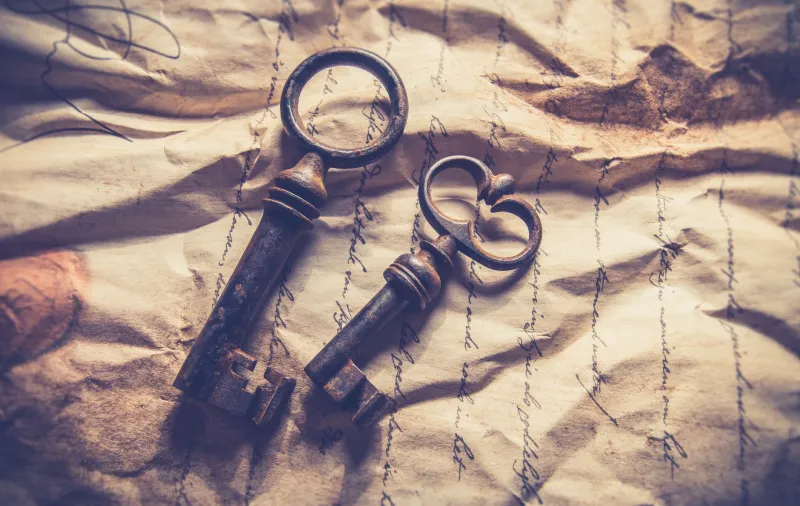
Somewhere in rural Tennessee, a retired schoolteacher keeps a cedar chest full of letters written by Civil War soldiers that no archive has ever cataloged. In a suburban Chicago garage, a third-generation collector stores a trove of Native American trade goods that predate the city itself. And in a cramped New York apartment, a woman in her eighties holds onto her grandfather's immigration documents — handwritten, stamped, and completely absent from any official government database.
These aren't anomalies. They're America.
For all the effort poured into building world-class museums, national archives, and university libraries, a staggering portion of this country's historical record lives not on public shelves but in private hands. And historians, researchers, and cultural preservationists are increasingly waking up to just how much they've been missing.
The Gaps Nobody Talks About
Official history has always had blind spots. Government archives tend to document what governments considered worth documenting — laws passed, wars fought, treaties signed. What gets left out is often just as revealing: the everyday lives of working-class families, the oral traditions of communities pushed to the margins, the paper trails of people who had every reason to stay off the record.
Private collections fill those gaps in ways that feel almost accidental. A family holds onto a bundle of letters because they belonged to great-grandma. A hobbyist spends decades buying up old photographs at estate sales without fully realizing he's assembled a visual archive of a vanished neighborhood. Someone inherits a box of business ledgers from a great-uncle and stuffs it in the attic because nobody knows what to do with it.
The result is a kind of shadow archive — vast, scattered, and largely invisible to the institutions tasked with preserving American memory.
"We've been operating under the assumption that the major collections hold the major stories," says one independent historian who has spent years tracking down private holdings across Appalachia. "But the further you get from the centers of power, the more you realize how much was never captured in the first place."
Historians Are Starting to Knock
The shift in how researchers approach private collections has been gradual but significant. A generation ago, academic historians were often dismissive of materials that hadn't been vetted by an institution. Provenance was everything, and if a document couldn't be traced through an established chain of custody, it was treated with suspicion.
That attitude has softened considerably. Partly it's pragmatic — certain stories simply cannot be told without going to where the evidence actually lives. Partly it reflects a broader reckoning within the humanities about whose histories have traditionally been considered worth preserving.
Oral history projects, community archive initiatives, and digital preservation efforts have all played a role in legitimizing the idea that history doesn't only happen in places with climate control and accession numbers. Researchers are now actively seeking out private collectors, placing ads in local newspapers, working through genealogical societies, and partnering with community organizations to surface materials that would otherwise remain unknown.
The findings can be extraordinary. Collections held by Black families in the South have yielded documentation of land ownership, business activity, and community life during the Reconstruction era — a period that remains poorly documented in official records due in part to deliberate destruction and institutional neglect. Letters and diaries held by Japanese American families have added texture and human dimension to the history of internment that government files alone could never provide.
The Tension No One Wants to Name
But here's where things get complicated. Private ownership and public access don't always play nicely together.
Collectors have rights. They've often spent real money, real time, and real emotional energy building their holdings. Many have a genuine, deep connection to the materials they keep — these aren't just objects, they're family legacies, personal obsessions, the result of years of careful stewardship. The idea that the public has some automatic claim on what sits in their living room is, understandably, not universally popular.
At the same time, history held entirely in private is history that can disappear. Collections get sold off piecemeal. They get damaged or destroyed. They get inherited by family members who don't share the original collector's passion and end up dumping everything at an estate sale. When that happens, the loss is often permanent.
The tension is real, and there's no clean resolution. Some collectors are remarkably generous — they welcome researchers, allow photographs, and actively seek partnerships with universities or local historical societies. Others are protective to the point of secrecy, wary of scrutiny over how they acquired certain items or simply unwilling to share what they see as theirs.
There's also the uncomfortable question of what happens when private collecting intersects with contested ownership. Indigenous artifacts, objects removed from historically marginalized communities, materials that may have been acquired under murky circumstances — private collections aren't immune to the ethical complexities that have forced major museums to confront their own histories.
A New Kind of Preservation
What's emerging, slowly and unevenly, is a new model for thinking about historical preservation — one that doesn't assume institutions are the only legitimate custodians of the past.
Digital tools have made it easier than ever to document private collections without requiring physical transfer. High-resolution scanning, online databases, and collaborative platforms mean that a family in Mississippi can share their grandfather's letters with a researcher in Oregon without putting a single original document in the mail. Some state humanities councils and local historical organizations are actively funding these kinds of outreach efforts, trying to build bridges between private holders and the broader research community.
There's also a growing recognition that the communities most likely to hold underdocumented histories are often the least likely to trust institutional overtures — and for good reason. Building the kind of relationships that allow genuine access takes time, consistency, and a willingness to let communities define their own relationship to their own materials.
None of this is simple. But the conversation is happening in ways it wasn't a decade ago, and that matters.
What's Sitting in Your Attic?
Here's the thing that tends to surprise people when they first hear about all this: the hidden archives of America aren't necessarily hidden in dramatic or mysterious ways. They're hidden in plain sight, in the ordinary accumulations of ordinary lives.
That box of old photographs your aunt never got around to sorting. The diary your great-grandmother kept during the Depression. The business records your family held onto after the shop closed. The letters that came back from overseas and never got thrown away.
Historians are starting to understand that the full story of this country isn't going to be found by looking only at what's already been collected and cataloged. Some of it — maybe a lot of it — is still out there, waiting in the places where people have always kept the things that mattered to them.
The question is whether we'll find ways to connect those private stories to the larger conversation before they're lost for good.