Weird, Wonderful, and Totally Worth It: Inside America's Booming Curiosity Collecting Scene
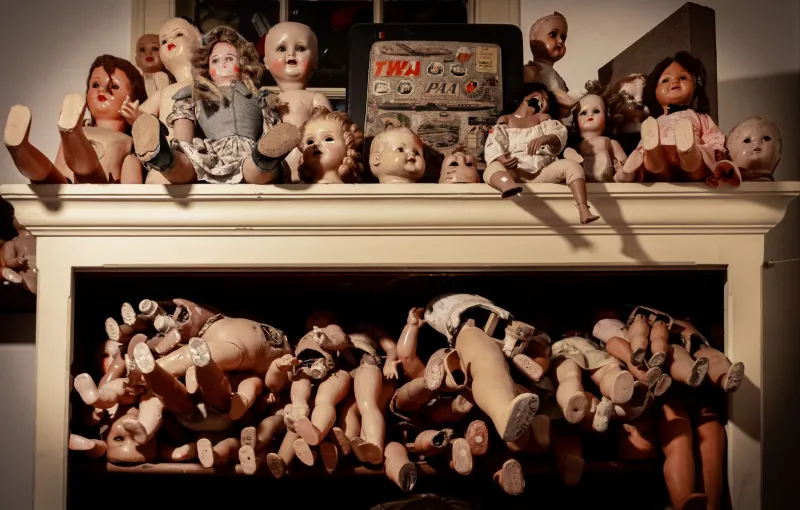
Walk into Priscilla Hartman's living room in Knoxville, Tennessee, and the first thing you'll notice is the Victorian mourning wreath made of human hair. The second thing you'll notice is that you're somehow not as unsettled by it as you expected to be. By the time she's pointing out her collection of antique apothecary bottles and a genuine 19th-century memento mori photograph, you're completely hooked.
"People always expect to be creeped out," Priscilla says with a laugh. "But then they end up standing there for an hour asking questions."
Priscilla is part of a fast-growing community of curiosity collectors—everyday Americans who seek out objects that are unusual, obscure, historically weird, or just deeply strange. Think antique medical instruments, taxidermied animals in unexpected poses, vintage circus posters, bottled specimens, and ephemera from the forgotten corners of history. It's a hobby with deep roots, but one that has found a surprisingly enthusiastic new audience in the social media age.
What Exactly Is a "Curiosity Collection"?
The concept actually goes back centuries. European aristocrats of the 16th and 17th centuries maintained what were called Wunderkammern—literally "wonder rooms" or "cabinets of curiosities"—filled with rare natural specimens, exotic artifacts, and bizarre oddities. These were early precursors to modern museums, places where the wealthy could demonstrate their access to the world's strangest corners.
Today's version is decidedly more democratic. You don't need a castle or a fortune to build a compelling curiosity collection. A $40 find at an estate sale or a $15 purchase from an Etsy seller specializing in antique ephemera can anchor an entire shelf. What matters isn't price—it's the story, the strangeness, and the sense of wonder an object provokes.
Collectors often gravitate toward specific niches. Some focus on antique medical and dental equipment (the older the better, and yes, the scarier the better). Others chase Victorian mourning culture artifacts, which include everything from jet jewelry to hair art. Wet specimens—preserved animals or organs in glass jars—have their own devoted following. Vintage sideshow banners, antique poison bottles, and early 20th-century quack medicine devices are all fair game.
TikTok Changed Everything
Ask almost any collector under 45 when things really took off, and they'll point to social media—TikTok in particular. Accounts dedicated to oddities collecting have racked up millions of followers, turning what was once a quietly niche pursuit into something that feels almost mainstream.
Marcus Webb, a 31-year-old from Portland, Oregon, started his TikTok account @OdditiesOnTheShelf in 2021 mostly as a personal archive. "I just wanted to document my stuff," he explains. "I never expected anyone to care." Today he has over 280,000 followers who tune in to watch him unbox estate sale finds, explain the history behind antique surgical tools, and occasionally react to particularly wild auction listings.
"What I've noticed is that people aren't just entertained—they're genuinely curious," Marcus says. "The comments are always full of questions. People want to know the history. They want context. It's not just about the gross-out factor."
That educational undercurrent seems to be a big part of the appeal. Many collectors describe their hobby as a form of living history—a way of preserving objects that would otherwise be lost, discarded, or misunderstood. When you own an 1890s fleam (a medical bloodletting tool), you're holding a direct connection to a medical philosophy that shaped human life for centuries.
The Psychology Behind the Obsession
So what draws someone to collect a jar of preserved beetles rather than, say, vintage baseball cards? Psychologists who study collecting behavior suggest that curiosity collectors are often driven by a specific kind of intellectual restlessness—a need to engage with history and the human experience in a tactile, personal way.
Dr. Sarah Okonkwo, a consumer psychologist based in Chicago who has studied collecting behavior, notes that objects associated with mortality, medicine, and the macabre tend to attract people who are comfortable confronting uncomfortable truths. "There's a psychological concept called 'benign masochism'—the idea that humans can enjoy mildly threatening stimuli in safe contexts," she explains. "Holding a Victorian medical device that was once used on a real person is unsettling, but it's also fascinating. That tension is pleasurable for a lot of people."
There's also a strong anti-mainstream streak running through the community. Many collectors describe a satisfaction in owning something that isn't mass-produced, that can't be found at Target, and that carries genuine historical weight. In a world increasingly dominated by digital everything, there's something powerfully grounding about a physical object with a strange and unknowable past.
The Estate Sale Gold Rush
For most collectors, the hunt is as satisfying as the find. Estate sales are the holy grail—particularly those from older homes in the Midwest and South, where families sometimes held onto objects for generations without thinking twice about their value or historical significance.
"You walk into an estate sale and you genuinely don't know what you're going to find," says Priscilla. "I once found a complete set of Victorian mourning jewelry in a shoebox in a garage in rural Tennessee. The family had no idea what it was. They thought it was just old jewelry."
Online marketplaces have expanded the hunting ground considerably. eBay remains a go-to for oddities, while platforms like Etsy have developed robust categories for antique ephemera and curiosities. Facebook Marketplace occasionally throws up surprises. Specialty dealers—many of whom sell at events like the Oddities Flea Market, which tours major US cities—offer curated selections for collectors who want something more vetted.
Prices vary wildly. A simple antique apothecary bottle might run $10 to $30. A well-preserved wet specimen in an attractive antique jar could fetch several hundred dollars. Rare Victorian hair art or high-quality antique medical devices can climb into the thousands.
How to Start Your Own Collection
If all of this has you eyeing the estate sales in your area with new interest, here are a few practical tips from veteran collectors:
Start with a theme. Trying to collect everything weird will quickly overwhelm your budget and your shelves. Pick a lane—antique bottles, vintage medical ephemera, taxidermy, Victorian photography—and go deep.
Do your research before you buy. Reproductions are common in this space, particularly for things like antique poison bottles and vintage circus posters. Learn to identify authentic pieces and don't be afraid to ask sellers for provenance information.
Connect with the community. The oddities collecting world is surprisingly welcoming. Instagram and TikTok are full of knowledgeable collectors who are happy to help beginners identify pieces and avoid overpaying.
Set a budget and stick to it. It's easy to fall down a rabbit hole. Estate sales and online auctions can feel like treasure hunts, and the excitement can override your better judgment. Decide what you're willing to spend before you start browsing.
Enjoy the stories. The best part of this hobby isn't the objects themselves—it's what they represent. Every piece has a history. Part of the joy is imagining it.
Wonder Is the Point
At the end of the day, curiosity collecting is exactly what it sounds like: a pursuit driven by wonder. Whether it's a 200-year-old glass eye, a drawer full of antique apothecary labels, or a beautifully mounted specimen from a natural history estate, these objects invite us to ask questions about the people who made them, used them, and lived alongside them.
In a world that often feels overwhelming and oversaturated, there's something quietly radical about filling your home with things that make you stop, stare, and think. Priscilla Hartman puts it simply: "Every single thing in this room has a story. That's not creepy. That's just history."
Hard to argue with that.